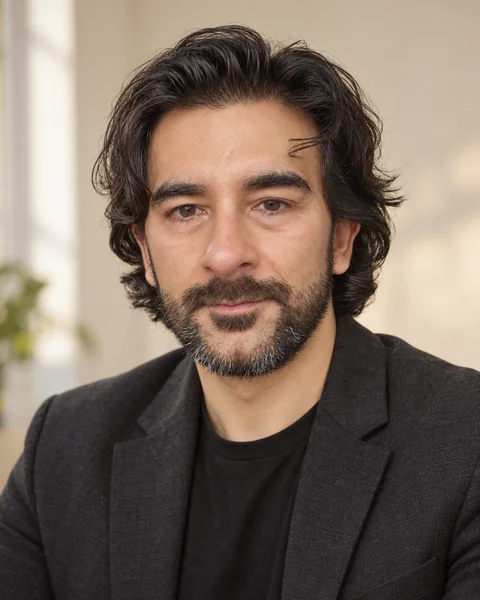
I am actively researching SkillSiftr and building Aether Many and CRM From Within. SkillSiftr explores how experienced people can move into work the AI economy needs. Aether Many and CRM From Within are part of a broader sovereign-AI thesis: people and companies should own the intelligence, software, and data they depend on. I also share Robotaxi Predictor, a project I built from personal interest. Before these, I built and exited FunnelBud.
What I'm building now
SkillSiftractive research
A research-stage project for helping mid-career U.S. professionals move from work disrupted by generative AI into AI implementation, governance, operations, and technology-transformation roles. I am speaking with companies about their needs and designing the first complete transition to test. The planned base is Austin, Texas.
Aether Manyin development
A personal AI agent that learns how you work, builds new abilities, and cooperates with other independently owned agents without giving up your control. I want people to own the intelligence that acts for them.
CRM From Withinin development
A service that builds an SME's first CRM around how the company already works. The company owns the software. CRM From Within can also build a better-fitting replacement before helping an existing CRM customer move into it.
The sovereign-AI thesis
Concepts I'm exploring
Works Like Usearly concept
AI trained for one company, owned and run by that company. Works Like Us fine-tunes an open model on approved examples of how the company works, improves it through feedback, and runs it on infrastructure the company controls.
Company Nativeearly concept
A concept for replacing generic rented software with custom software a company owns. Company Native would carry over the existing data and workflows, help users move safely, and maintain the new system.
Tools I share publicly
Robotaxi Predictorpersonal project
A Tesla robotaxi fleet tracker I built for myself and decided to share. It estimates how many vehicles appear active and compares the rollout with published investor expectations.
FIRE Decision LabArchived · September 2026
I wanted to know whether a portfolio could fund spending indefinitely. I turned that research into a free planner, strategy comparisons, articles and tools for practising difficult market decisions. I stopped work in September 2026 after attempts to build a regular audience did not gain traction. The completed work remains available.
What I have done
FunnelBudFounder and CEO
Founded and built the CRM and marketing automation company before Holdflight acquired it in 2025.
AI trading botPrivate project · live
I used to spend a lot of effort reading public sources and trading on them by hand. My bot now does that part, so I can focus on the trading that matters most to me and that I enjoy thinking through myself. Here's what building it taught me about the future of software.
CirratoGlobal marketing
Built the company's inbound marketing and sales process.
OracleSales
Worked in technology sales before leaving to build FunnelBud.
What would be useful to discuss
Writing
- Why I think AI agents will replace much of today’s software
- Privacy in AI agents is a judgment problem, not a classification problem
- The future of value [IN PROGRESS]
- How to combine bottom-up and top-down problem-solution finding to create genius level new companies
- What is CRM and how will it change in the age of abundant intelligence?
- The strategy mistake I made at FunnelBud for years
- The path from LLMs to AGI
- Comprehensive Guide: How to understand what your customers need based on qualitative interviews
- How the software industry will change when development cost nears zero (who will still make money?)